
Mythical Planet — Fauna dossier
Yeti
Pongiodus borealis formosanus
Series preview · Series 1 · Episode 03
Playlist · Frozen Frontiers
Explore more
episodes.
Search the archive
01Anatomical highlights
Hollow white fur

Hollow white guard hairs and a dense undercoat retain insulating air. The pale coat provides camouflage against snow and ice.
Grasping extremities
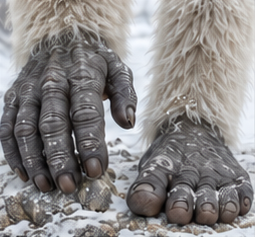
Powerful hands and broad, textured feet grip rock and compacted snow. Flexible digits support controlled movement across steep, uneven terrain.
High-altitude respiration
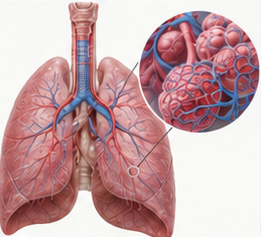
A broad thorax supports ventilation during climbing. A proposed dense pulmonary capillary network aids oxygen exchange in thin mountain air.
Sheltered sense organs
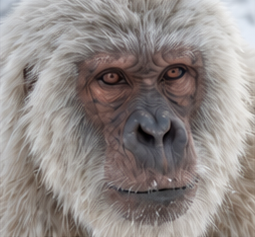
Deep-set eyes and fur-sheltered ears reduce exposure to wind and glare. Hearing supports detection of distant calls across mountain valleys.
Load-bearing anatomy
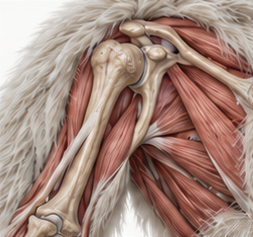
Robust shoulder and forearm structures support climbing and scrambling. A low, stable posture helps distribute weight on broken alpine ground.
02Size comparison
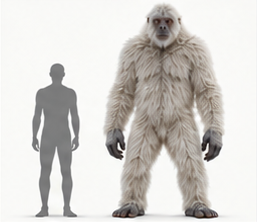
Adult standing height: 2–3 m. Shown beside a 1.8 m human for scale.
03Evolutionary relationships
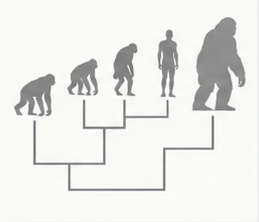
Proposed placement: Primates → Hominidae → Pongiodus. The exact divergence from other hominins remains unresolved.
04Diet & ecology
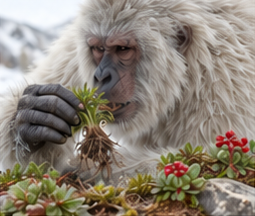
Proposed omnivore: alpine shoots, roots and seasonal berries, supplemented opportunistically by animal foods. Wide-ranging foraging may disperse seeds between valleys.
The expedition continues
New episodes.
Every week.

Habitat
Himalayan alpine slopes, snowfields and rocky valleys.
Diet
Proposed omnivore; roots, shoots, berries and opportunistic animal foods.
Activity pattern
Wide-ranging; activity follows local weather and feeding opportunities.
Social structure
Usually solitary; long-distance calls locate mates and mark territories.
Lifespan
40–60 years.
Watch the film: https://www.youtube.com/watch?v=7c-xaGNUw4E
Dossier: https://mythical-planet.com/species/yeti/
Leave a Reply