
Mythical Planet — Fauna dossier
Pegasus
Equus alatus
Series preview · Series 1 · Episode 04
Playlist · Sky Realms
Explore more
episodes.
Search the archive
01Anatomical highlights
Feathered flight surfaces
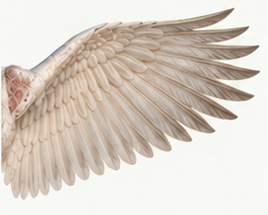
Layered primary and secondary feathers form broad lifting surfaces. Fine adjustments to feather position control lift, turning and braking during canyon crossings.
Reinforced flight shoulders
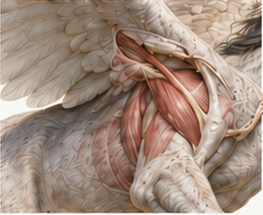
Enlarged shoulder attachments distribute wing forces across the upper thorax. Powerful flight muscles support take-off while preserving the independent movement of all four legs.
Plateau-adapted hooves
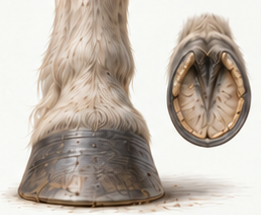
A firm hoof wall and resilient sole support movement over stony ground. Secure footing helps the herd reach exposed grazing areas and cliff-edge launch sites.
Grazing dentition
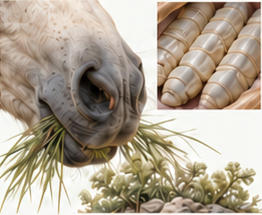
Broad incisors crop grass and brush, while ridged cheek teeth grind fibrous food. Lichens supplement the diet where exposed plateau vegetation is sparse.
Fledging on the plateau
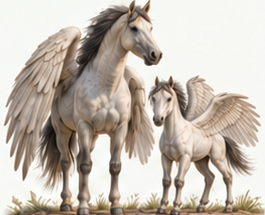
Young remain with the herd on sheltered high plateaus while flight feathers develop. Adults guide the first chasm crossings once the young can sustain flight.
02Size comparison
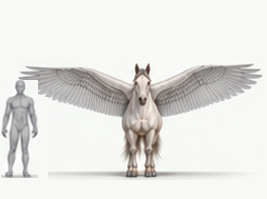
Height 2–2.2 m. Full wingspan 6–7m. A 1.8 m human is shown; wings are swept.
03Evolutionary relationships
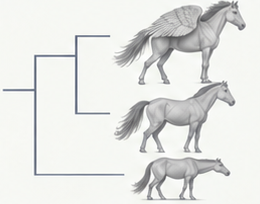
Perissodactyla → Equidae → Equus → Equus alatus. Equine grazing and running adaptations are retained alongside a reinforced flight-bearing thorax and feathered wings.
04Diet & ecology
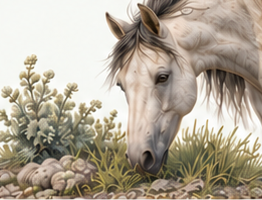
Vegetarian, feeding on grass, brush and lichens. Seasonal grazing links plateau habitats, while manure returns nutrients to thin upland soils along the herd’s routes.
The expedition continues
New episodes.
Every week.

Habitat
Open plateaus, mesas and high canyon rims.
Diet
Vegetarian; grass, brush and lichens.
Activity pattern
Seasonal migration, grazing and canyon crossings.
Social structure
Migratory herds; young fledge on high nursery plateaus.
Lifespan
15–20 years.
Watch the film: https://www.youtube.com/watch?v=cXB8K5Vp1hc
Dossier: https://mythical-planet.com/species/pegasus/
Leave a Reply