Mythical Planet — Fauna dossier
Gryphon
Aquilofelis gryphus
Series preview · Series 1 · Episode 05
Playlist · Open Plains
Explore more
episodes.
Search the archive
01Anatomical highlights
Raptorial beak
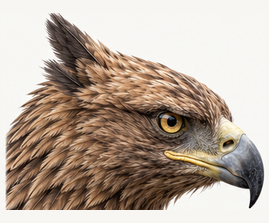
A deep, hooked keratin beak grips and tears prey. Forward-facing eyes support precise distance judgement during the final approach and pounce.
Taloned forepaws
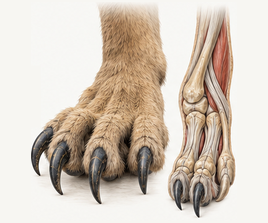
Broad feline forepaws carry strongly curved claws. These secure footing during the stalk and restrain struggling mammals and reptiles after contact.
Vestigial wings
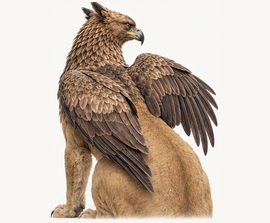
Reduced feathered wings cannot sustain true flight. A brief, powerful sweep adds speed and height to the pounce, while the feathers help steady the landing.
Spotted cubs
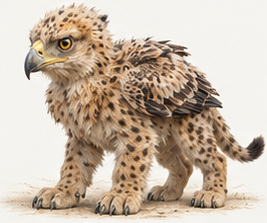
Cubs hatch with soft down, spotted tawny fur and small folded wings. Their broken pattern blends with grass and the shadowed crevices around the nest.
Kopje nesting
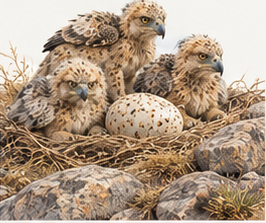
Eggs are laid in a nest atop a low, small rocky kopje. The elevated site shelters a brood of three or four cubs above the open savannah.
02Size comparison
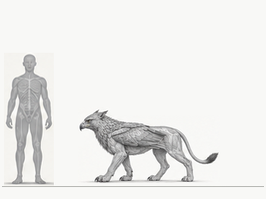
Shoulder height 70–100 cm. A representative adult stands beside a 1.8 m human on the same ground line; the measurement is to the shoulder, excluding head and wings.
03Evolutionary relationships
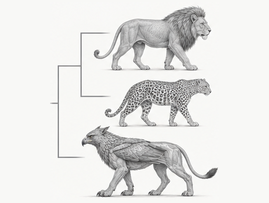
Carnivora → Gryphidae → Aquilofelis gryphus. The lineage retains the muscular trunk and four-legged gait of feline predators, with a beak, feathered forequarters and reduced wings.
04Diet & ecology
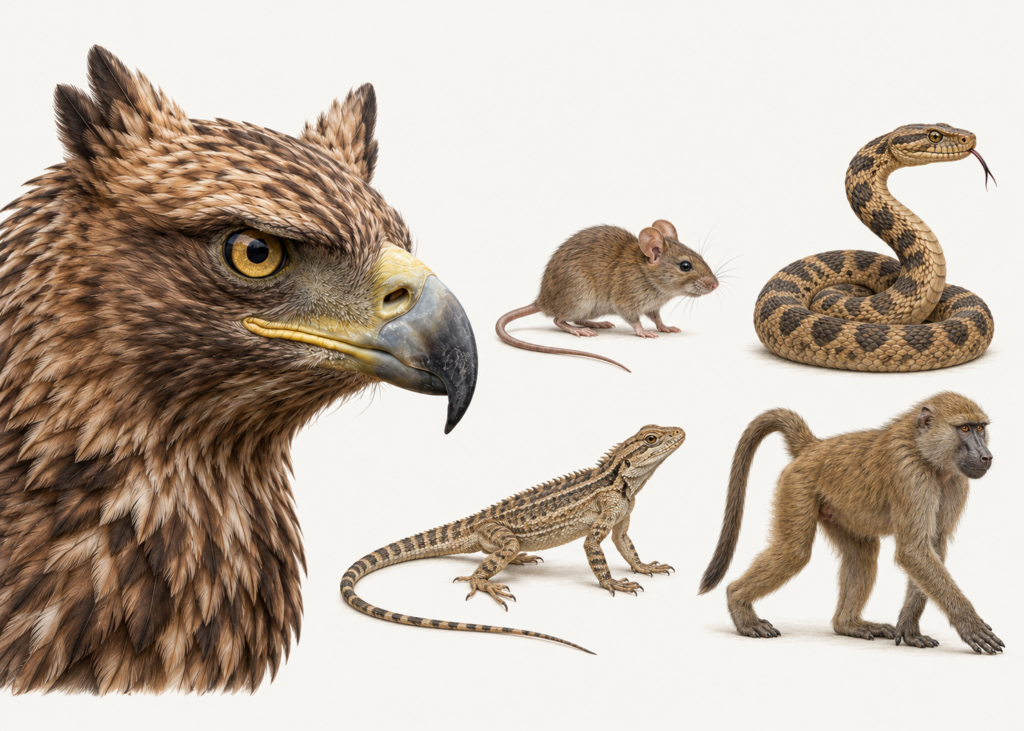
An opportunistic carnivore feeding on small mammals, snakes and other reptiles, with occasional winged monkeys and baboons. Stealth and a brief pounce minimise the need for prolonged pursuit.
The expedition continues
New episodes.
Every week.

Habitat
Dry savannahs, open grassland and low rocky kopjes worldwide.
Diet
Carnivore; small mammals, snakes, other reptiles, and occasionally winged monkeys and baboons.
Activity pattern
Stalks through cover, then commits to a short, wing-assisted pounce.
Social structure
Usually hunts alone; nesting adults rear broods of 3–4 cubs.
Lifespan
8–12 years.
Watch the film: https://www.youtube.com/watch?v=kr0St9YneaI
Dossier: https://mythical-planet.com/species/gryphon/
Leave a Reply