
Mythical Planet — Fauna dossier
Death Worm
Olgoia fulgurans
Series preview · Series 1 · Episode 06
Playlist · Desert Survivors
Explore more
episodes.
Search the archive
01Anatomical highlights
Segmented armour
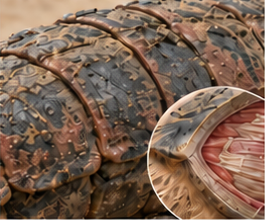
Overlapping plates protect the body from abrasive sand. Flexible seams allow successive segments to expand and contract, driving the worm through loose dunes.
Static-collecting pits

Recessed skin pits expose fine collectors during sandstorms. Contact with charged, colliding quartz grains transfers static electricity into the animal’s charging system.
Charge-storage cells
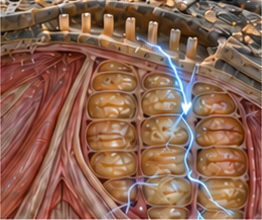
Specialised cells accumulate harvested charge between hunts. Insulated tissues separate these reserves from surrounding organs until coordinated discharge stuns or kills prey.
Annular feeding jaws
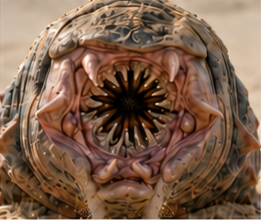
Muscular oral rings expand around trapped prey. Inward-pointing teeth secure a grip while repeated contractions draw food into the digestive tract.
Buried ambush
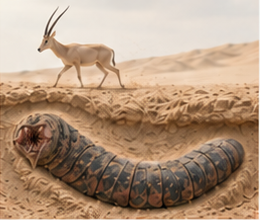
The worm waits beneath established mammal trails. Localised sand collapse entraps a passing animal, allowing a stored discharge and close-range feeding without pursuit.
02Size comparison
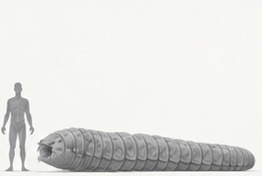
Body length approximately 4–6 m. A 1.8 m human is shown for comparison; the worm is displayed at full length.
03Evolutionary relationships
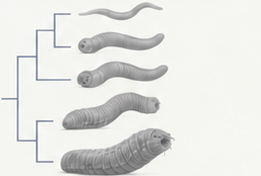
Annelida → Clitellata → Arenicolida → Olgoiidae → Olgoia fulgurans. The segmented body plan supports specialised burrowing, armour and electrical charge storage.
04Diet & ecology
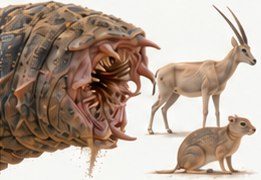
Carnivorous and opportunistic, feeding mainly on mammals. Concealed ambushes exploit animal trails, while limited stored charge favours careful selection of feeding opportunities.
The expedition continues
New episodes.
Every week.

Habitat
Sandy desert basins and loose dunes of the Gobi.
Diet
Carnivore; opportunistic hunter feeding mainly on mammals.
Activity pattern
Subterranean ambushes; surfaces only during sandstorms to recharge.
Social structure
Solitary; waits beneath mammal trails between charging events.
Lifespan
Unknown.
Watch the film: https://www.youtube.com/watch?v=nY3om1yLQ48
Dossier: https://mythical-planet.com/species/death-worm/
Leave a Reply