
Mythical Planet — Fauna dossier
Savannah Dragon
Draco concinnus
Series preview · Series 1 · Episode 01
Playlist · Open Plains
Explore more
episodes.
Search the archive
01Anatomical highlights
Cranial horns
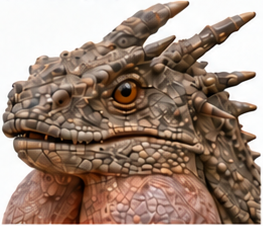
Keratin-covered cranial horns protect the head during close contact and form a prominent visual signal during courtship displays.
Vestigial wings
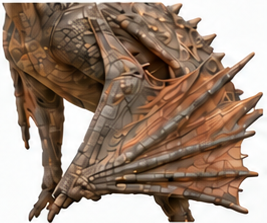
Reduced wing membranes assist balance and visual display. Elongated supporting digits spread the patagium during movement and courtship.
Respiratory system
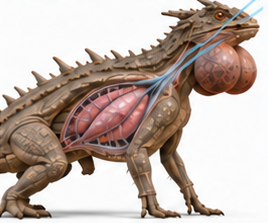
Paired lungs occupy the thorax behind the shoulder girdle. A protected airway supplies the lungs, remaining separate from the expandable chemical throat sacs.
Heat management
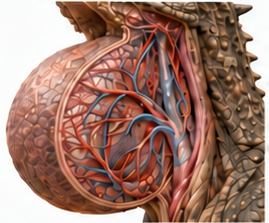
Dense blood vessels in the throat-sac walls regulate heat exchange. Controlled blood flow helps dissipate excess warmth after energetic displays.
Reproductive system
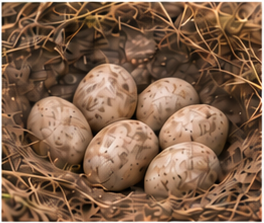
Females lay leathery-shelled eggs in shallow burrows. Terrestrial nests shelter developing young in open grassland habitats.
02Size comparison
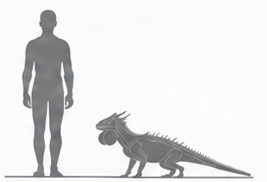
Approximately 1.2 m long, including the tail. Shown alongside a 1.8 m human for visual comparison.
03Evolutionary relationships
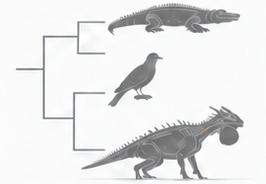
Archosauria → Draciformes → Draconidae → Draco concinnus. The Savannah Dragon belongs to an archosaur lineage alongside crocodilians and birds.
04Diet & ecology
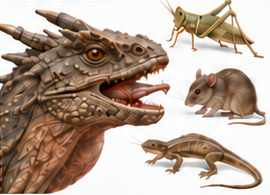
Carnivorous; feeds on insects, small mammals and reptiles. Its feeding activity helps control invertebrate populations in grassland ecosystems.
The expedition continues
New episodes.
Every week.

Habitat
Open savannahs and grasslands of Africa and Asia.
Diet
Carnivore: insects, small mammals and reptiles.
Activity pattern
Diurnal; most active in the early morning and late afternoon.
Social structure
Usually solitary outside courtship; males gather at lekking grounds.
Lifespan
10–14 years in the wild.
Watch the film: https://www.youtube.com/watch?v=3RhVtPsDya4
Dossier: https://mythical-planet.com/species/savannah-dragon/
Leave a Reply