Mythical Planet — Fauna dossier
Phoenix
Phoenicopterus ignis
Series preview · Series 1 · Episode 07
Playlist · Sky Realms
Explore more
episodes.
Search the archive
01Anatomical highlights
Iridescent plumage

Layered copper-brown feathers carry teal and violet iridescence. They insulate the body during normal activity but do not make adults immune to fire.
Raptorial feeding
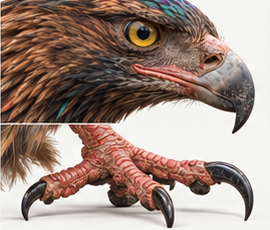
A hooked beak tears flesh while strong, curved talons seize small mammals. The same feeding apparatus allows adults to scavenge when hunting is unproductive.
Resin-lined nest
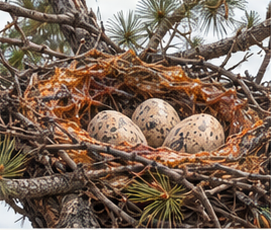
Nests are built in late spring and lined with flammable pine resins. Eggs laid during the drying summer remain sheltered until a natural fire arrives.
Heat-triggered eggs
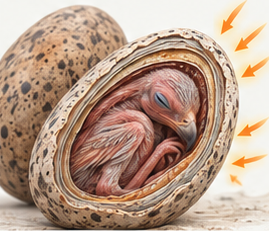
Insulating eggshell layers protect the embryo while transmitting the sustained heat needed to trigger hatching. This specialised reproductive stage depends on intense forest fire.
Precocious chicks

Mobile chicks emerge after the fire and feed on insects and carrion left in the burn. Food is available even when a parent has perished.
02Size comparison
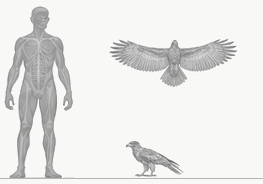
Total length 56–69 cm; wingspan 1.33–1.42 m. Comparable to a large hawk. The grey human is 1.8 m tall; bird length is measured head to tail.
03Evolutionary relationships
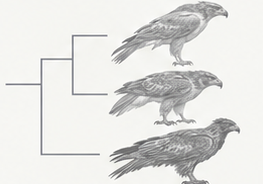
Accipitriformes → Pyricaptoridae → Phoenicopterus ignis. The Phoenix retains the hooked beak and grasping feet of raptors, with a specialised fire-dependent reproductive cycle.
04Diet & ecology
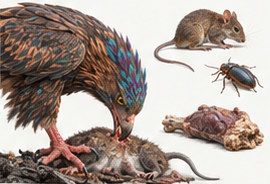
Carnivorous, feeding on small mammals, insects and carrion. Adults hunt and scavenge; post-fire carrion supports the young, linking reproduction to the pulse of food after burning.
The expedition continues
New episodes.
Every week.

Habitat
Dry pine forests and their open woodland margins.
Diet
Carnivore; small mammals, insects and carrion.
Activity pattern
Diurnal; breeding follows the local late-spring and summer fire season.
Social structure
Usually solitary; adults converge around seasonal nesting territories.
Lifespan
3–5 years, limited by terminal reproduction.
Watch the film: https://www.youtube.com/watch?v=vLQ6ib2gMPw
Dossier: https://mythical-planet.com/species/phoenix/
Leave a Reply